Table of Contents
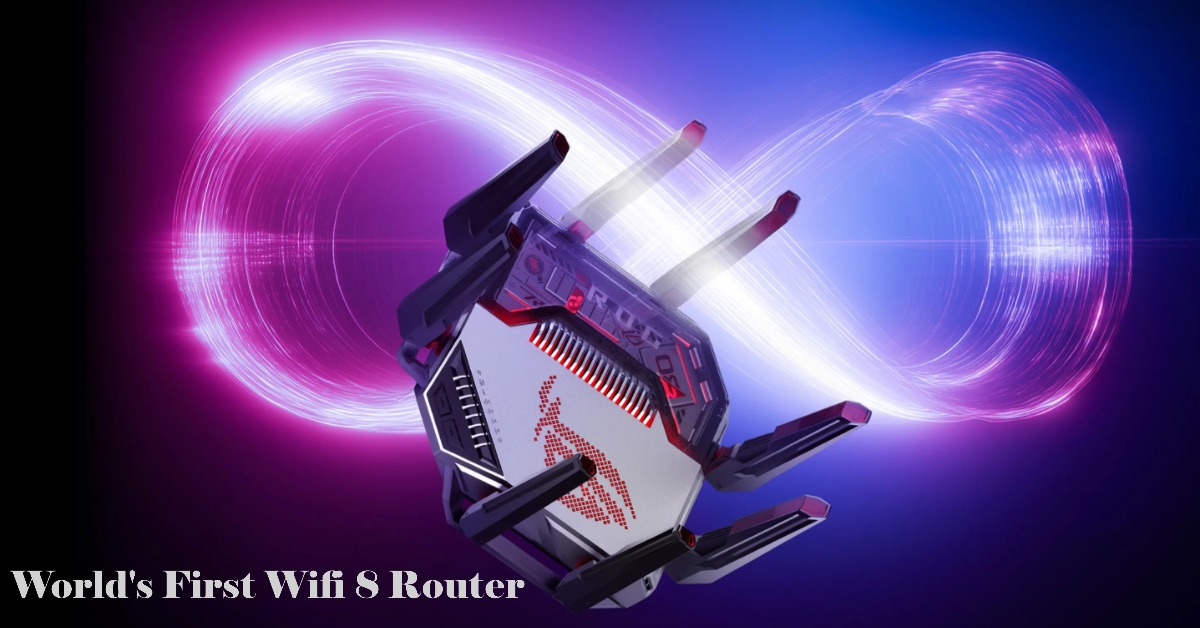
While the mainstream market is still actively upgrading to Wi-Fi 7, ASUS has pulled off an unexpected power play. In an official announcement on September 4, 2026, ASUS unveiled the immediate retail availability of its next-generation Wi-Fi 8 lineup in Canada, led by its ultra-flagship: the ROG Rapture GT-BN98 Pro.
This surprise early drop places the world’s first commercially available quad-band Wi-Fi 8 gaming router onto Canadian retail shelves today, giving networking enthusiasts an early preview before the full global rollout begins in October 2026.

Here is a comprehensive breakdown of what Wi-Fi 8 (IEEE 802.11bn) brings to the table, what the ROG Rapture GT-BN98 Pro packs inside its translucent chassis, and what buyers should anticipate ahead of the worldwide release.
1. What to Expect from Wi-Fi 8 (IEEE 802.11bn)
Unlike previous generational leaps (such as Wi-Fi 6 to Wi-Fi 7), which prioritized raw speed ceilings and wider channel sizes (up to 320 MHz), Wi-Fi 8 pivots toward Ultra-High Reliability (UHR).
The engineering goal of 802.11bn isn’t solely to post theoretical speed records—it is to eliminate sudden throughput drops, reduce mid-to-long-range falloff, and coordinate seamless communication across high-density device environments.
Core Architectural Advancements:
- UEQM (Unequal Modulation): Traditional modulations force entire channel transmissions to adapt down to weaker subcarriers. UEQM dynamically adjusts modulation rates across individual subchannels, preventing a single pocket of interference from tanking whole-link performance.
- NPCA (Non-Primary Channel Access): When the primary channel encounters brief congestion or radar interference, compatible devices can route packets over clear secondary channels rather than queuing up and waiting.
- Multi-AP Coordination & Dynamic Spectrum Scheduling: Significantly cuts down co-channel interference in crowded apartment buildings and dense smart-home layouts by scheduling transmissions intelligently between neighboring access points.
- Extended IoT Reach: Up to 2x wider return coverage for battery-constrained smart home gadgets, resolving the common problem where low-power IoT devices can hear the router but struggle to talk back.

2. Wi-Fi 7 vs. Wi-Fi 8
Wi-Fi 7 (IEEE 802.11be Extremely High Throughput / EHT) focused primarily on raw physical layer throughput—introducing 320 MHz channels, 4096-QAM (4K-QAM), and Multi-Link Operation (MLO) to push multi-gigabit speeds.
In contrast, Wi-Fi 8 (IEEE 802.11bn Ultra High Reliability / UHR) represents a fundamental design pivot: instead of chasing higher peak theoretical speeds, it prioritizes consistency, interference immunity, and low-latency predictability in dense, real-world environments.
Architectural Overview: Wi-Fi 7 vs. Wi-Fi 8
| Dimension | Wi-Fi 7 (802.11be – EHT) | Wi-Fi 8 (802.11bn – UHR) |
| Core Philosophy | Extremely High Throughput (EHT): Maximize theoretical PHY ceiling under ideal link conditions. | Ultra High Reliability (UHR): Maximize median throughput, cut 99th-percentile tail latency, and preserve links at edge ranges. |
| Channel Bandwidth | Up to 320 MHz (6 GHz) | Up to 320 MHz (retained from Wi-Fi 7; no wider channels added) |
| Peak Modulation | 4096-QAM (12 bits/symbol) | 4096-QAM (retained; primary innovation is per-subchannel flexibility) |
| Spectrum Access | Preamble Puncturing, Enhanced CCA | NPCA (Non-Primary Channel Access) |
| Modulation Granularity | Uniform MCS across whole channel allocation | UEQM (Unequal Modulation) |
| Multi-AP Handling | Mostly autonomous BSS; basic Coordinated OFDMA | Standardized Coordinated Beamforming (Co-BF) & Coordinated Spatial Reuse (Co-SR) |
3. Deep Dive: ROG Rapture GT-BN98 Pro Hardware & Specifications
The ROG Rapture GT-BN98 Pro (BN30000) is Republic of Gamers’ most advanced home networking platform to date.
| Specification | Details |
| Model Code | GT-BN98 Pro (BN30000) |
| Wireless Standard | Wi-Fi 8 (IEEE 802.11bn), backward compatible with 802.11be/ax/ac/n |
| Frequency Bands | Quad-Band (2.4 GHz + Dual 5 GHz + 6 GHz) |
| Aggregate Bandwidth | Up to 30,000 Mbps total wireless throughput |
| Processor | 2.6 GHz 64-bit Quad-Core CPU |
| System Memory | 2 GB RAM |
| Antenna Layout | 16-antenna architecture packed into 8 high-performance external 3D antennas |
| Multi-Gig Ports | 2x 10 Gbps ports (1x 10G dedicated Gaming LAN/WAN + 1x 10G LAN/WAN) |
| Additional Ports | 4x 2.5 Gbps LAN ports (including dedicated multi-WAN auto-detect) |
| Link Aggregation | Supported up to 20 Gbps |
| Cooling & Thermals | 30% thicker aluminum top plate, nanocarbon layer, elevated airflow stand (+35% heat dissipation vs. GT-AXE16000) |
| Security & Software | Subscription-free AiProtection Pro, Guest Network Pro, Safe Browsing, Instant Guard VPN |

4. Gaming Acceleration & Network Intelligence
For competitive gamers and low-latency workloads, ROG integrated dedicated intelligence systems into the GT-BN98 Pro:
- Dedicated 10G Gaming Port: Hardware-level priority tagging routes gaming traffic instantly without requiring manual QoS configuration.
- 3-Level AI Game Boost:
- Device Optimization: Auto-detects gaming rigs, consoles (PlayStation, Xbox, Nintendo Switch), and handhelds (ROG Ally, Steam Deck) to prioritize their data streams.
- Adaptive QoE: Analyzes real-time traffic to guarantee packet delivery for competitive gaming even while other household devices stream 4K/8K HDR video.
- GTNet Server Routing: Dynamically calculates latency routes to prioritize the lowest ping path to global game servers rather than merely the shortest physical hop.
- WiFi Insight & 24-Hour Telemetry: An enterprise-grade diagnostic engine logs interference over a rolling 24-hour window, automatically shifting channel allocation when neighboring Wi-Fi signals encroach on your airspace.
- Guest Network Pro: Easily isolates networks into dedicated VLAN SSIDs, including specialized segments for IoT smart homes, kid-safe parental control profiles, and dedicated VPN tunnels.
5. Does It Benefit Current Wi-Fi 7 and Wi-Fi 6E Devices?
A fair question whenever new networking standards arrive early: Is it worth buying if client devices don’t have Wi-Fi 8 chips yet?
According to ROG’s internal laboratory benchmarks, the router delivers tangible advantages to existing setups:
- Immediate Gains for Wi-Fi 7 Clients: High-end client devices leveraging 320 MHz channels and 4K-QAM benefit directly from the GT-BN98 Pro’s reinforced RF front-ends, lower noise floors, and robust 2.6 GHz processing power.
- Drastic Reduction in Range Falloff: Thanks to structural RF antenna improvements and higher dynamic sensitivity, mid-to-long-range signal degradation through drywall and concrete floors is visibly mitigated even on Wi-Fi 6 and Wi-Fi 7 hardware.
- Massive Multi-Gig Wired Infrastructure: With two 10G ports and four 2.5G ports, home labs, NAS storage servers, and multi-gigabit fiber ISP connections (5 Gbps+) will no longer bottleneck behind standard gigabit switches.

6. Rollout Timeline & What Lies Ahead for October 2026
ASUS has laid out a phased global introduction for its Wi-Fi 8 ecosystem:
- Canada (Available Now): The flagship ROG Rapture GT-BN98 Pro (BN30000) is currently stocked in Canadian retail stores.
- Worldwide & US Launch (October 2026): Global availability begins in October alongside a companion SKU—the standard ROG Rapture GT-BN98 (BN25000) quad-band model.
- ZenWiFi BN12 Mesh Launch (October 2026): For whole-home coverage up to 7,000 sq. ft., ASUS will launch the ZenWiFi BN12, the world’s first 12-stream tri-band Wi-Fi 8 mesh system featuring dual 10G wired backhaul ports and 2x LDPC wall-penetration technology.
7. The Takeaway
ASUS isn’t waiting around for the standard to trickle out slowly. By launching the ROG Rapture GT-BN98 Pro ahead of schedule, ASUS establishes an early benchmark for high-reliability, multi-gigabit home networking—cementing its position at the bleeding edge of the 802.11bn transition.